


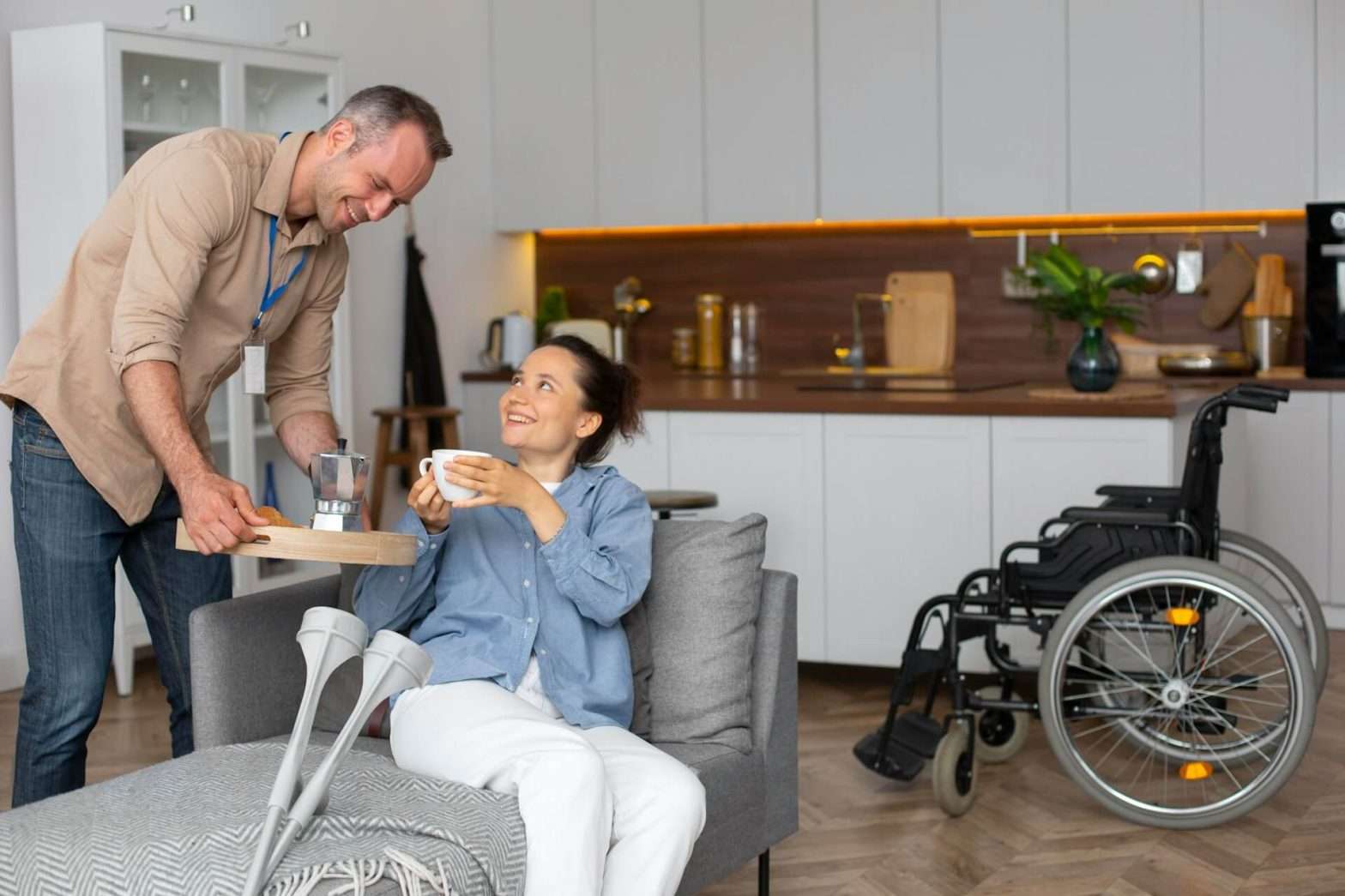
For many people living with disability, the right daily support is what makes independent living possible. Supported Independent Living (SIL) is designed for participants who need regular or 24/7 assistance at home. It covers help with daily tasks, skill-building and community access so you can live the way you want — safely and with dignity.
At QP Care, we walk alongside you through the whole SIL journey — from the first conversation to moving into the right home and settling into a routine that actually works. If you’re in Melbourne’s north-west and considering SIL, this guide explains the process in plain English and shows where our team can help.
What SIL actually covers (and what it doesn’t)
SIL focuses on the supports you need at home rather than the bricks and mortar. Think:
- Personal care (showering, dressing, grooming)
- Meal prep and household tasks
- Medication prompts and night-time support
- Building everyday skills (budgeting, shopping, public transport)
- Social and community participation
Housing itself is separate. If you also need help finding a suitable place to live, explore our Supported Accommodation options or chat to us about vacancies close to family, services and transport. Where required, higher levels of support are available through 24 Hour Care, and short breaks can be arranged via Respite & STA.
Good to know: SIL is usually budgeted under Assistance with Daily Life (Core). The NDIA sets funding based on your needs and a provider’s quote and roster of care. It isn’t a “blanket” amount and there are no guarantees — every plan is different.
Who SIL is for
SIL is generally suitable if you:
- Need frequent or constant support to be safe at home
- Benefit from overnight assistance (active or sleepover)
- Would like to live in a shared home with support workers on site, or individually with scheduled supports
- Want to build independence over time while maintaining a safe routine
If you’re not sure SIL is the right fit, start with our Your Guide to NDIS or speak with us about alternatives such as Daily Activities and Community Participation.
The SIL application process (step by step)
1) Start the conversation
Reach out to our friendly team for a free initial consult. We’ll listen to what’s happening now, what’s working, and what’s not. If SIL looks appropriate, we’ll outline the next steps and timelines.
→ Get in touch via Contact Us or lodge a Referral if you’re a support coordinator or family member.
2) Prepare for your NDIS planning or plan review meeting
Together we’ll map out your daily support needs, goals and risks. We’ll also talk through housing preferences (shared home vs individual), location, cultural needs and routines. If you don’t have a coordinator, our Services team can guide you on what to bring.
Helpful prep:
- A typical week (mornings, evenings, overnight)
- What you can do independently vs where you need help
- Goals (e.g., cook twice a week, travel to TAFE, manage money)
- Any risks (falls, seizures, behaviour of concern) and current safeguards
3) Gather evidence
The NDIA relies on evidence to decide if SIL is reasonable and necessary. We help you collect and organise:
- Allied health reports (OT, physio, psych) and functional assessments
- Behaviour support plans (if relevant)
- Incident/risk information where support mitigates risk
- Current support logs (hours, tasks, prompts vs physical assistance)
If assessments are missing, your plan may include funding to get them. We’ll coordinate this so nothing stalls.
4) Select your provider and discuss the living model
You can seek quotes from one or more providers. When you meet with QP Care, we’ll talk through options, such as:
- Shared SIL homes with on-site support workers
- Individual living with scheduled drop-in supports plus on-call/overnight
- Transitional arrangements, including Respite & STA if a short stay helps you try supports before committing
We’re a multilingual, culturally responsive team, so if you’re from a CALD background, let us know what matters — language, food, gender preferences for personal care, prayer times, and community connections all shape a good support plan.
5) Build the quote and roster of care (ROC)
This is the backbone of your SIL request. We’ll map your supports in 30-minute blocks across a typical week and explain the why behind each block (safety, skills, health). The NDIA looks for clarity and consistency here.
What we include:
- Support hours (day, evening, sleepover/active night)
- Ratios in shared settings (e.g., 1:2 for cooking, 1:1 for personal care)
- Supervision needs when you’re at risk without prompts
- Skill-building activities linked to your goals
6) NDIA assessment
Your planner will review the evidence, the quote and the ROC. They may ask questions or request tweaks. We stay available to clarify the practical realities — especially around risks, night-time needs and what “independence” looks like for you.
7) Funding decision and service agreement
If approved, SIL funding will appear in your plan and we’ll confirm a service agreement — what we’ll deliver, when, and how we’ll work together. If the decision doesn’t match your needs, we can talk about next steps, including internal review.
8) Move-in and settling
For shared homes, we’ll arrange visits, meet housemates and set expectations so everyone starts well. For individual living, we’ll lock in your roster and escalate any equipment or environment tweaks. Our goal is a calm, predictable start with room to grow.
How long does it take?
Timeframes vary. Evidence gathering and quotes typically take a few weeks if assessments are current; longer if new reports are needed. NDIA decisions depend on workload and complexity. We’ll give you an honest view up-front and keep you updated.
What can slow things down (and how we avoid it)
- Light evidence: We help you gather clear, recent assessments and practical support logs.
- Vague rosters: Our ROCs are detailed and tied to risks and goals, not generic blocks.
- Housing unclear: We’ll align your supports to the actual setting (shared vs individual).
- Cultural needs missed: We document language, diet, gender preferences and routines so supports are realistic from day one.
Real-world example (composite)
A participant in Deer Park living with epilepsy and limited vision wanted to move closer to family and study. Their existing plan funded drop-in supports, but night-time events were a concern. We collected updated OT and neurology reports, kept a two-week support log, and mapped a ROC with evening and sleepover coverage plus community skill-building. The NDIA approved SIL aligned to a shared home with on-site overnight support. Outcome: safer nights, predictable mornings, and enough energy to attend classes.
Why families choose QP Care
- Culturally responsive: Multilingual staff and genuine respect for CALD preferences
- North-west Melbourne focus: Local knowledge, local homes, local networks
- Person-centred: Your goals drive the roster, not the other way round
- End-to-end help: From referral to move-in, plus ongoing reviews
- Holistic supports: Link SIL with Daily Activities, Community Participation and 24 Hour Care if needed
You can read more about our approach on About Us and browse all Services.
FAQs
Is SIL the same as SDA (Specialist Disability Accommodation)?
No. SIL funds the supports. SDA relates to the building. Some people receive both; many receive SIL in standard housing. If housing is your main barrier, speak with us about options through Supported Accommodation.
Can I choose who I live with?
Where possible, yes. We look at age, interests, routines and compatibility. Trial visits help everyone feel comfortable.
What if English isn’t my first language?
That’s okay. Our team includes multilingual staff and we can arrange interpreting. Cultural preferences are built into your support plan from the start.
Do you guarantee approval?
No provider can guarantee funding. We’ll present strong, honest evidence and keep the process transparent. For general questions, our FAQ is a handy place to start.
Next steps
If SIL sounds right for you or someone you support, let’s talk. We’ll keep the process simple, respectful and grounded in your goals.
- Call: 1300 330 292
- Message us: Contact Us
- Make a referral: Referral form
Prefer to read more first? Start with Your Guide to NDIS and then explore Supported Independent Living for how we deliver SIL day to day.
Disclaimer: Information here is general in nature and aligned with NDIS terminology. QP Care does not make guarantees about funding approvals. We respect privacy — see our Privacy Policy for details.